

What do we Europhiles actually value about Europe and the EU? What makes it worth our while to campaign for rejoin? I guess there are many answers to that question. For some its the economic benefit; for others the peace and security; not to forget the culture and history, the idealism and humanity, the beautiful cities, the good railways, the flexible and fair systems of voter representation. (Sometimes). What’s more, every part of Europe has distinctive features that have their own special drawing power. French sophistication and sense of history; Dutch and Scandinavian open-ness, German fairness and generosity. And the other regions- the Mediterranean countries, the Visegrad countries – so courageously transcending their difficult histories. All these, I’m sure, exercise different degrees of attraction depending on who we are.
Since 2016 the grass has looked distinctly greener over the channel. in comparison to Britain, Europe’s politics have appeared civilized, humane and adult, and European societies ( not all but many) have looked prosperous, efficient and rational, unlike the chaotic mess that has been the UK. I’m aware that over those years I have created an idealized picture of a kinder, gentler social democratic Europe, shimmering tantalizingly out of reach across the channel while we suffered the miseries of Johnson and Truss.
Since 2016 many of us have felt stranded and exiled. Certainly for me, separation-anxiety from Europe and hostility to the Tory government became closely entangled in my mind.

Now the Tories have gone, it’s maybe time for me to do some mental disentangling; to decide how much my Europhilia reflects a positive commitment to a vision of Europe; and how far it reflects a revulsion from aforementioned Johnson and Truss. The latter are now gone, and the feeling of how it is to be British has been transformed. I’m suddenly aware that some of the emotions that I thought were pro-Europe were actually anti-conservative. I’m aware also that I need to rebalance my commitment to Europe in a way that is more rational and realistic.
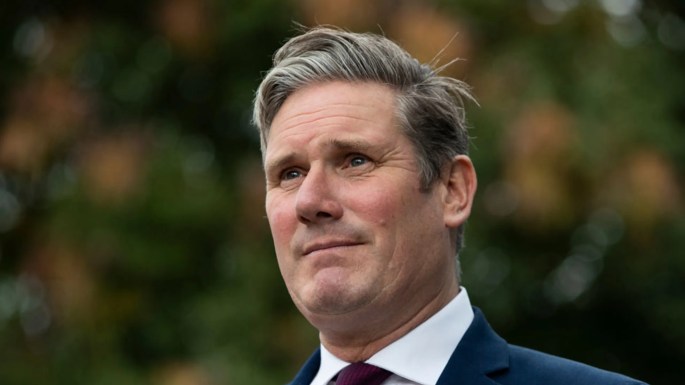
First, though, what would be a rational and realistic take on the new UK government? Clearly they have a very different pedigree from the toxic heritage of the Tories. Starmer and Lammy are cautious about what they say on Europe, but we know that at heart they are remainers. However, It is unclear how far they will be able or willing to go in reversing, or even modifying Brexit. They look over their shoulders at the red wall, the Brexit press,and Reform. And the EU is well aware that the right wing of UK politics is now thoroughly steeped in Brexit ideology, and, unfortunately, that they will return to power in due course, determined to wreck any reconnection with the EU.
And what about my rational and realistic take on the EU? I know that my view of European politics has been distorted by the Brexit experience and that in reality Europe was never really a centre-left domain. The European centre-right has always been strong, and we need look no further than the long dominance of Angela Merkel to see the embodiment of that. As to European politics being civilized, humane and adult; yes, so far I think I’ll stand by that; though with some exceptions.
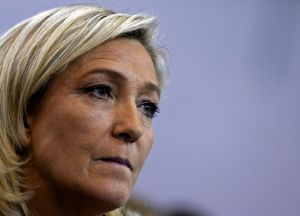
But now, realism and rationality present us with yet another challenge. Perfectly timed with our election result, we have the surge of the European far right. This has been brewing for some time, in Hungary, Poland, Italy, Slovakia, Sweden; and now it has come through strongly in the European elections, and specifically in national elections in our nearest neighbours, France and Holland.
It’s a reminder that Europe’s politics are complicated. Its also a good time to remember that the roots of the EU are themselves complex, representing several ideological strands. Alongside the social democratic strand of, for instance, Jaques Delors (Mrs Thatcher’s particular hate) there is also a strand of Catholic conservatism carrying a vision of Europe as a Christian stronghold, even as a reincarnation of Charlemagne’s empire. The late Robert Schuman, one of the founding fathers, was a Christian democrat with deep religious commitment, who is at present on his way to canonization. He was for a time a member of the Vichy government. So its a complicated ancestry. The populist movements that have made such progress recently are not an alien growth. They have deep roots in European politics.
So its important that we centre-left Europhiles on this side of the channel re-accustom ourselves to the real politics of Europe. There is a danger that arrival of the new Labour government and the advance of the European right will combine to weaken the rejoin project. After all, why entangle ourselves with a bunch of populists over the channel now that the conservatives are off our backs? Shouldn’t we maybe settle for the status quo? However, that would be to abandon realism and rationality just when we need it most. We need Europe, warts and all. The economic arguments for EU membership haven’t changed, and that includes the Brexit heritage of a 4% annual growth deficit that needs to be made good. And now more than ever there is security. If, as seems increasingly likely, Trump wins in November, the US will become much less interested in defending Europe, and we’ll have to step up ourselves. Our relationships with the rest of Europe, and specifically with the EU, become a matter of survival. It won’t be straightforward, because some of the European far right are ambivalent about security priorities, with elements of pro-Putin sentiment in some countries. We will need to re-engage with Europe’s complicated politics to put our weight where it is needed. First steps on the long road back.
Stephen Wilmot
 derby4europe