Vance’s Speech at Munich

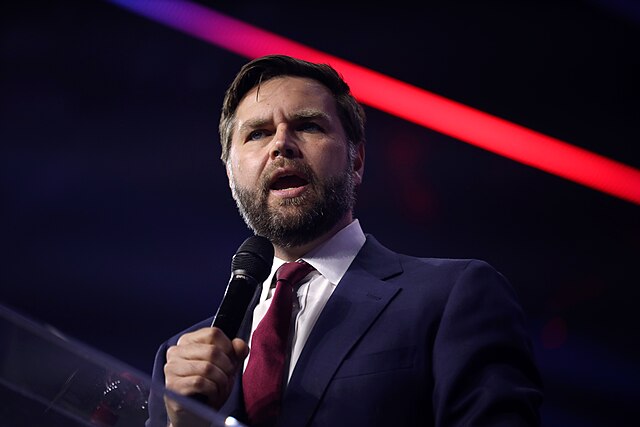
US Vice President Vance’s speech to the Munich security conference last week came as something of a shock, not only because of its undisguised hostility to Europe, but also because of the basis of that hostility. The speech was focused on ‘culture war’ issues around  immigration, reproductive rights and religious dissent. Vance’s claim, that these internal issues were somehow a bigger threat to Europe than Vladimir Putin, was frankly bizarre. My reading of Vance’s book ‘Hillbilly Elegy’ indicated that Vance is a balanced, thoughtful and humane man. However, his Munich speech suggests a very different person. We don’t know how far Trump had vetted his speech beforehand, but there have been no visible repercussions since, so we can take it that he approved it, before or after, as the Trump administration’s view of Europe.

There are several possible explanations for the speech, some of them not mutually exclusive. Let me run through a few, with ratings:

  • ‘Tough Love’ shock therapy to get Europe to pay more for its defence.  But that doesn’t stack up. Vance actually minimized the external threats to Europe, telling us that we are our own worst enemies. 2/10
  • A sincere exhortation to Europe to converge with Trump and Vance’s version of the US: Christian, conservative and white. Vance would certainly be the right man to put that case, as he seems to really believe in that version of America. For Trump its just a vote-winner. But the hectoring hostility of the speech surely casts doubt on that explanation. 3/10
  • A signal to Europe’s far right that they have a friend in America. That has a little more credibility. Far right governments in Europe would be more compliant with US policy than the present incumbents; But the far right would be even more compliant with Russian policy. Do Trump and Vance realise that? 5/10
  • A signal to Vladimir Putin that the US is no longer a friend to Europe, so no longer its protector against Putin’s ambitions. Yes, that certainly has more credibility. Even Vance’s language echoes some of Putin’s anti-liberal rants. 7/10
  • A pre-justification exercise, casting Europe as unstable and corrupt. By implication that makes Europe unfit to be included in the Ukraine negotiations. This explanation probably comes top on credibility, now that Trump has started negotiating with Putin about Ukraine. Without Europe. 9/10

Whatever the intention, the speech clearly signals a widening ideological gulf between the US and the present political order in Europe. If we put this alongside Trump’s territorial demands and threats against Canada and Denmark, its fairly clear that the NATO alliance is a dead letter. The US is recasting itself as an adversary to most of its former allies. Its tone is aggrieved and predatory.

NATO was founded on the assumption of US leadership, and has worked on that basis for 75 years. It’s hard to imagine how that could be unpicked if the US turns rogue. A fresh start is the logical response, though the practical challenges of that are huge. The only pre-existing institutional arrangement that includes most (not all) of the other NATO members is the EU, which in institutional terms is completely unsuited to being the framework for a miliary alliance. But there is no obvious alternative, other than a return to 1930’s Europe, with small states jockeying for position, and short-lived two or three-state alliances, mostly being picked off and gobbled up by Hitler or Stalin in the end. Not a good model.

Stephen Wilmot

Five Years of Brexit

The BBC’s 5 year overview of the results of Brexit (published last week and authored by Ben Chu and Tamara Kovacevis), strikes a careful tone of neutrality, but can‘t disguise the damage done to our economy and society by Brexit.

It starts by saying “Brexit was hugely divisive, both politically and socially, dominating political debate and with arguments about its impacts raging for years”.

 
The authors select 5 areas for review.  Here are a few highlights:

1. Trade

The authors say that some recent studies suggest  UK exports are 30% lower than they would have been if we had not left the single market and customs union.

Several studies suggest around this figure. One example from the Centre for Business Prosperity Aston University; Unbound: UK Trade post-Brexit (September 2024; authored by By Jun Du, Xingyi Liu, Oleksandr Shepotylo and Yujie Shi). Find it on:

https://www.aston.ac.uk/sites/default/files/2024-09/Full%20Report.pdf.

Alternatively we have a different figure from the Centre for Economic Performance Discussion Paper no 2066.   (December 2024 authored by Rebecca Freemen et al) They put the drop at only 6.4%.

The Office of Budget Responsibility still believes that the long-term reduction in imports and exports will be 15% and that will continue to reduce the size of the economy by 4%

New trade deals with other countries seem to make up for about 5% of the total loss from Brexit (my calculation). but we still await deals with India and the US.

2. Migration:

EU net immigration fell from 300,000 in 2016 to a negative rate now as more EU citizens left the UK than came in.

Non EU migration increased from from 70/80,000in 2016 to 900,000 last year

3. Travel

UK citizens have lost the right of residence in the EU.

The EU is introducing 2 new measures to control travel from outside EU next year, either or both of which could create a great deal of travel delay and inconvenience.

4. Laws

Many EU laws have stayed on the statute book despite the expressed intention of the last government to remove them

5. Money

Like all EU members the UK paid a contribution to the EU’s kitty, and that stopped in 2020. Our annual payment into the EU at that stage was £18bn. However, with rebates and payments coming back in from the EU amounting to about half of that, the notional annual saving is £9bn.

Happy New Year

2024 has been an important year for pro-Europeans, giving us, as it has, a Labour government in the UK and Trump in the US.  July 2024 marked the end of five years of a ferociously Brexiteer Tory government, purged to resemble a revolutionary vanguard, and determined to reshape the politics and culture of the UK. Rejoiners were just one group among many whom the Tory Brexiteers identified as enemies, as we shared that honour with the BBC, the legal profession, teachers, universities, the Woke of every description, and of course the EU itself; among many others. Over those five years the atmosphere in the UK was highly polarized and, despite seeking to be a broad church, pro-Europeans were placed in a position of direct antagonism to the government.

Now, six months after the election, the situation is transformed, and everything is much more complicated. With Labour in power, we move from polarization to ambiguity. We know that most Labour MPs, members and voters are anti-Brexit. But holding an opinion and deciding a course of action from that opinion are very different things. Though we hear and read pro-EU opinions from Labour quarters often enough, action moves very slowly. There is clearly an active dialogue between the UK government and the EU commission on a number of fronts. Those involved in campaigning for rejoining Erasmus, the EU student exchange programme, will feel some encouragement from discussions over youth mobility, though agreement still seems a good way off. Progress on other key areas, security, fishing and the veterinary agreement, is also slow and halting.

Meanwhile, having lost the government, the Brexiteer centre of gravity has migrated, and now bestrides the Atlantic.  Trump has been hostile to the EU since his first administration, and many commentators anticipate that he will use the stick of tariffs and the carrot of a trade deal to coerce the UK away from the EU and toward economic subjection to the US. In that event we would be required to sacrifice much of what we value. The biggest sacrifice, probably, would be our health. We would be required to abandon many of our food standards to allow US imports; and we would be expected to open our National Health Service to predatory US healthcare provider companies. Moreover Trump’s ally Elon Musk is threatening to use his colossal wealth and influence to undermine the present UK government. And they have a serviceable outrider in Farage. He evidently sees himself as Trump’s representative on earth, and given his political skills, its likely that he will perform that function very effectively. So, having endured five years of a home-grown Brexit hegemony, we will now be facing four years of the transatlantic version. Does Starmer have the guts to stand up to this? De we?

As to the European Movement itself, I quote Chair Mike Galsworthy’s end-of-year message to members emailed on December 27th. His list of achievements is as follows:

  • “Our movement now holds the secretariat for the All-Party Parliamentary Group (APPG) on Europe – a move welcomed by the government and which has huge potential to drive political change from the heart of Westminster. 
  • Our movement welcomed Caroline Lucas and Dominic Grieve KC as our new Co-Presidents, backed up by a stellar new line-up of Vice-Presidents and patrons
  • Our movement ran our first Europe Day in collaboration with the National Liberal Club, bringing Guy Verhofstadt from Brussels to join us.
  • Our movement launched a Manifesto on Europe during the general election and sent it to thousands of political candidates, making their replies available via our online tool.
  • Our movement has launched nationwide campaigns, with Face The Music, This is Erasmus, and a call for an inquiry into the future UK-EU relationship.
  • Our movement is now getting into national press more frequently than ever before and we’re building media capacity fast.
  • Our movement now has 24,000 members – and is growing every day

In addition to all that he is asking for ideas from members on what the EM should be focusing on in 2025. Reply to info@europeanmovement.co.uk

Other pro-rejoin organizations have also been active during the year. These include broadly focused groups such as Grassroots for Europe, the Rejoin Party and the March for Rejoin, as well as specifically focused organizations such as Thank EU for the music, and the Festival of Europe (see our ‘Get Involved’ page for links to these). The March for Rejoin successfully organized the second annual march, in London, in September.

New Year is a good time for reflection and reappraisal, and Mike Galsworthy’s request for ideas is worthy of a response. So, when it comes to thinking outside the box, there’s no time like the present.

Happy New Year

Stephen Wilmot

Mandelson says Rejoin could start in 10 years

Peter Mandelson recently said he thought talks on UK re-entry to the EU could start in 10 years. He identified some of the things that would need to happen to make this possible, including a significant improvement in the UK economy, and a restoration of trust between the UK and the EU. The second of these would require better conduct of diplomacy on the UK side. This estimate (as he pointed out) is somewhat in advance of Starmer’s recent statement that rejoin will not happen in his lifetime (he is 62). But then, Mandelson can say what he really thinks.

I want to take Mandelson as my starting point and consider the 10-year frame for rejoin. Clearly he is right about the UK economy. Investment and productivity need to improve significantly for the UK to be seen as a potential asset to the EU. Starmer’s government sees economic progress as a two-term job, and that means ten years. And there’s no guarantee that it will be achieved.  Much depends on outside factors. But the recent Draghi report on the Eurozone economy must likewise have impacted the confidence of the EU’s leadership, presenting as it does a comparable economic challenge for the EU. There are similarities between the problems of the EU and the UK, particularly with regard to lack of investment in potential growth areas. An EU that feels economically vulnerable will likely be pessimistic about the prospects of readmitting a similarly vulnerable UK economy.

On the other hand, the UK is a military power- particularly a naval power- on Europe’s doorstep, and in an increasingly insecure world, the EU might see it as desirable to have the UK back in the fold, despite economic weakness, because of that naval power.  More of that below.

We already know that either way, more ground needs to be made up in the EU/UK relationship because of the pattern of hostility and  bad faith that UK conservative governments have pursued against the EU since 2016. That pattern needs to be broken by Starmer and Lammy in an unambiguous way, and a relationship of trust and mutual esteem needs to be established. Work on this has started, but the UK’s attitude – Starmer’s attitude, specifically – is ambiguous and inconsistent. Progress on Youth Mobility would be a building-block of trust, and that could be progressed substantially in five years, let alone ten.

However, internal politics holds these processes to ransom on both sides of the channel. I shall focus on the right wing of politics in both cases, as the political centre and left are generally well-disposed to UK rejoin, so much depends on the direction of travel on the right wing, both in the UK and in the EU. In the EU the far right is prospering, and is likely to become more influential in coming months and years. They are characterized by varying degrees of Euroscepticism, some of which (eg  Meloni) seem to be contingent and accommodatable, others of which (eg AfD) look more dangerous. What happens to these movements over the next ten years is crucial to the EUs prospects, and to the UK’s prospects of reconnecting. The European far right could break up the EU, or they could make it their own.  

The right wing in the UK is, at present, almost entirely pro- Brexit and anti-EU, at least in public. The Conservative Party is both those things, and Reform even more so. Could this change over the next decade? At present the prospects look poor.  Reform, which appears to have considerable growth potential, exists primarily as an ethnic nationalist, anti-foreigner party.  Their agenda is to cast the EU as an enemy, alongside immigrants. The Conservative parliamentary party has been purged of overt remainers, and at present no Tory MP dares to express any positive views about Europe (Peers are a slightly different matter). Tory membership in the country has always been Eurosceptic. 

So what might change on the UK right? The only real hope must lie in the passage of time. The present generation of leaders will be on their way out in ten years, and we don’t know who will succeed them. We don’t know which way thinking will go in the younger reaches of the Conservative party. Witch-hunts tend to run out of steam after a few years, and people become weary of the resulting polarization. Also we don’t know what kind of nationalism will dominate the right wing of the party ten years from now. If its civic nationalism, that would at least allow right-wing Tories to be a little friendlier to neighbouring countries with similar institutions to ours. If its ethnic nationalism, no foreigner is to be trusted. As for the conservative party membership, the grim reaper will dispose of many of those, given their age profile. But there is no guarantee that they won’t simply be replaced by slightly younger members of a similar ilk.

The other great imponderable is the direction of travel in the rest of the world. US politics took a change of direction in 2016 and shows no sign of reverting to what we would once have called ‘normality’. If Trump wins, his administration will have little interest in the UK, considerable hostility to the EU, and deep ambivalence toward NATO. If he is succeeded by Vance, that is likely to continue for most of the ten-year period.  If Trump pulls the US out of NATO, the UK will be in sore need of allies nearby, and will in any case need to give priority to the security of Europe. As one of the more significant military powers in Europe its relative importance would inevitably grow, drawing it into a closer involvement with its EU neighbours; unless it consciously chooses an isolationist future.

 If Harris wins, the US position will be more like the present one, which involves an ongoing pivot away from Europe and toward the Pacific. So the drift of America away from Europe and NATO will be slower. A Harris administration is also more likely to want to recreate the pre-brexit situation where the UK acted as a bridge between the US and the EU. The logical implication of that is that she would be predisposed to encourage closer links between the UK and Europe. Its not clear what priority that would have for her, but it would be a nudge in the right direction.

What about the rest of the world? Russia is unlikely to get any friendlier after Putin. Probably it will continue to threaten Europe, and try to undermine the EU by adopting disruptive proxies such as Orban. China is being wooed by Starmer and Reeves now, as a source of investment into the UK, and that may progress into a better relationship. But it is not clear whether the Chinese see any advantage for themselves in either keeping the UK out of the EU, or pushing it toward rejoining. Either way the EU is a more important trading partner for China than is the UK, and a workable relationship with the EU is probably a higher priority for them. If China decides to take a clear stance regarding the UK rejoining the EU, their overal weight and influence in the world may make that a significant factor in the process.  

I have assumed so far that the EU will remain in a ‘steady state’ over the next ten years, so that we can plan and predict around it. Almost certainly that assumption is wrong. I have mentioned the need for action to improve economic performance, and that is imperative if the EU is to remain stable. But forces other than the financial are at work also in the EU – social, cultural and political – and these may produce important changes in the next ten years. These may offer opportunities for the UK in its relations with the EU, but it will be just as likely to present challenges. That’s a bigger subject, for another time.

So all in all Peter Mandelson looks rather optimistic in his ten-year projection. But his experience of politics and diplomacy, particularly around the UK and the EU, is unrivalled, and he has proved an astute observer and operator over many years. He has much experience of how things can change, and of what changes can realistically be achieved. Last but not least, he will certainly be fully aware of all the potential problems that I have outlined here. But he is still optimistic. Well, optimists often achieve more than pessimists. We should take him seriously.

Stephen Wilmot
More bad news for Brexit

Aston University’s Centre for Business Prosperity have analysed the monthly trading figures between the UK and the EU since 2021.  Their finding is that the Trade and Cooperation Agreement, negotiated by the Johnson government, has had a negative effect on UK-EU trade. They use the term ‘stifling’.

It shows a 27% drop in UK exports to, and a 32% reduction in imports from, the EU.  It also shows a 33% decrease in the variety of products exported from the UK.

The implications of this for the UK’s economy are clear; and bad. Its one of the most damning pieces of data on the effects of Brexit so far. I guess it won’t be the last.

More information, plus a PDF of the report itself, is on the Aston University website:

https://www.aston.ac.uk/research/bss/research-centres/business-prosperity/unbound

Starmer’s Strategy

Rejoiners can only feel hopeful about Keir Starmer’s quest for a closer relationship with Germany. Still the economic powerhouse of the EU despite its present travails, Germany’s goodwill toward the UK will be crucial in creating a closer economic relationship with the EU as a whole. All this is moving in the right direction.  

So why was he (or rather his news-management machine) making such a song and dance about not agreeing to Youth Free Movement and not rejoining Erasmus? That looks like mixed messages.

Steve Anglesey in ’The Rejoinder’ (Aug 29) suggests a three-part explanation for this behaviour. First, Youth Free Movement and Erasmus look too much like the dreaded  freedom of movement, and we know that immigration is at the top of the British public’s list of anxieties at the moment.

Second, he doesn’t trust the apparent shift in public opinion about Brexit. Anglesey doesn’t say this explicitly, but I guess we might suppose that Starmer suspects the opinion shift against Brexit is shallow and unreliable; not a firm basis for political action. And he may well be right.  In the light of both of those considerations he chooses to hold off risking a ‘betrayal’ backlash, waiting (Anglesey suspects) until the Tories have a new leader, and are fully engaged in warfare with Reform about what counts as a good Brexit.  And therefore have less spare firepower to turn on him.

Those calculations may be sound.  However, that is not a reason for rejoiners to go quiet and wait on events. Those events may keep Starmer spooked indefinitely, and we need to create a counter-pressure against his natural caution. This pressure would need to be long-term, as the process of reconnecting with Europe is probably going to be a slow one. And it would need to be focused, with clear priorities.

There is a rationale for keeping our focus on Youth Free Movement in general, and Erasmus in particular. They should have priority in any campaigning for rejoin, for the following reason:

One of the strongest cards in the brexiteers hand throughout their long campaign, was the fact that British people identify less with Europe, on average, than do most other Europeans. Several surveys have shown over the years that European-ness constituted a fairly small part of the average Britons sense of identity. This meant that commitment to EU membership always tended to be shallower, more conditional than is the case for other Europeans.  This gave leverage to the brexiteers, and we have all suffered the consequences. In the long run this could get worse, with a vicious circle of ongoing Brexit isolation producing an even more insular nation. That would be bad for all of us.

In moving the country back toward Europe, we need to invest in a long-term cultural shift toward a stronger European identity, making Britain a stronger and more stable part of the European family. And we need to focus on is the younger generation. The more positive contact they have with other Europeans, the more European they are likely to become in their outlook. This would include travel, study and perhaps work in Europe, and also contact with Europeans doing the same in the UK. The more that contact happens, the more European the younger generation will become.

There are many routes along which we can work to build better and closer relations with Europe. But each of those needs realistic timing. Erasmus and Youth Free Movement have two time-scales, one to start the process and one to accrue their benefits. Those benefits will take decades to fully accrue, but will constitute a crucial change in our culture. But the process needs to start as soon as possible, and that requires a clear message to Starmer that there is a major constituency for this move. We need to show that we will support him if he finds the courage to stand up to the brexiteers. And we will challenge him if he doesn’t.

Stephen Wilmot  

Europe, warts and all.

What do we Europhiles actually value about Europe and the EU? What makes it worth our while to  campaign for rejoin?  I guess there are many answers to that question. For some its the economic benefit; for others the peace and security; not to forget the culture and history, the idealism and humanity, the beautiful cities, the good railways, the flexible and fair systems of voter representation. (Sometimes).  What’s more, every part of Europe has distinctive features that have their own special drawing power. French sophistication and sense of history; Dutch and Scandinavian open-ness, German fairness and generosity. And the other regions- the Mediterranean countries, the Visegrad countries – so courageously transcending their difficult histories. All these, I’m sure, exercise different degrees of attraction depending on who we are.

Since 2016 the grass has looked distinctly greener over the channel. in comparison to Britain, Europe’s politics have appeared civilized, humane and adult, and European societies ( not all but many) have looked prosperous, efficient and rational,  unlike the chaotic  mess that has been the UK. I’m aware that over those years I have created an idealized picture of a kinder, gentler social democratic Europe, shimmering tantalizingly out of reach across the channel while we suffered the miseries of Johnson and Truss.

Since 2016 many of us have felt stranded and exiled. Certainly for me, separation-anxiety from Europe and hostility to the Tory government became closely entangled in my mind.

Now the Tories have gone, it’s maybe time for me to do some mental disentangling; to decide how much my Europhilia reflects a positive commitment to a vision of Europe; and how far it reflects a revulsion from aforementioned Johnson and Truss. The latter are now gone, and the feeling of how it is to be British has been transformed. I’m suddenly aware that some of the emotions that I thought were pro-Europe were actually anti-conservative. I’m aware also that I need to rebalance my commitment to Europe in a way that is more rational and realistic.

First, though, what would be a rational and realistic take on the new UK government? Clearly they have a very different pedigree from the toxic heritage of the Tories. Starmer and Lammy are cautious about what they say on Europe, but we know that at heart they are remainers.  However, It is unclear how far they will be able or willing to go in reversing, or even modifying Brexit. They look over their shoulders at the red wall, the Brexit press,and Reform. And the EU is well aware that the right wing of UK politics is now thoroughly steeped in Brexit ideology, and, unfortunately, that they will return to power in due course, determined to wreck any reconnection with the EU.

And what about my rational and realistic take on the EU? I know that my view of European politics has been distorted by the Brexit experience and that in reality Europe was never really a centre-left domain. The European centre-right has always been strong, and we need look no further than the long dominance of Angela Merkel to see the embodiment of that. As to European politics being civilized, humane and adult; yes, so far I think I’ll stand by that; though with some exceptions.  

But now, realism and rationality present us with yet another challenge. Perfectly timed with our election result, we have the surge of the European far right. This has been brewing for some time, in Hungary, Poland, Italy, Slovakia, Sweden; and now it has come through strongly in the European elections, and specifically in national elections in our nearest neighbours, France and Holland.


It’s a reminder that Europe’s politics are complicated. Its also a good time to remember that the roots of the EU are themselves complex, representing several ideological strands. Alongside the social democratic strand of, for instance, Jaques Delors (Mrs Thatcher’s particular hate) there is also a strand of Catholic conservatism carrying a vision of Europe as a Christian stronghold, even as a reincarnation of Charlemagne’s empire. The late Robert Schuman, one of the founding fathers, was a Christian democrat with deep religious commitment, who is at present on his way to canonization. He was for a time a member of the Vichy government. So its a complicated ancestry.  The populist movements that have made such progress recently are not an alien growth. They have deep roots in European politics.

So its important that we centre-left Europhiles on this side of the channel re-accustom ourselves to the real politics of Europe. There is a danger that arrival of the new Labour government  and the advance of the European right will combine to weaken the rejoin project. After all, why entangle ourselves with a bunch of populists over the channel now that the conservatives are off our backs? Shouldn’t we maybe settle for the status quo? However, that would be to abandon realism and rationality just when we need it most. We need Europe, warts and all. The economic arguments for EU membership haven’t changed, and that includes the Brexit heritage of a 4% annual growth deficit that needs to be made good. And now more than ever there is security. If, as seems increasingly likely, Trump wins in November, the US will become much less interested in defending Europe, and we’ll have to step up ourselves. Our relationships with the rest of Europe, and specifically with the EU, become a matter of survival. It won’t be straightforward, because some of the European far right are ambivalent about security priorities, with elements of pro-Putin sentiment in some countries. We will need to re-engage with Europe’s complicated politics to put our weight where it is needed. First steps on the long road back.


Stephen Wilmot

Reviewing our Goals

The other week Neil Kinnock put his name on a European Movement email to members, presenting us with seven goals and asking us to choose up to three of these as our own priorities. This was clearly a preparation for what many of us hoped would be a changed situation after the election on July 4th. Well, that situation has indeed changed, and we have a new government with a very different attitude to Europe. This seems a good time to re-calibrate and re-energize our goals, and Neil Kinnock’s list gives us a good start.

The goals are:

1 Building strong relationships with new MPs and the next government

2 Public awareness campaigns to persuade more people about the benefits of EU membership

3 Working with businesses to make the case for rejoining the single market

4 Campaigning for tangible improvements, such as re-entry into Erasmus+ and a better deal for actors and musicians

5 Growing the diversity and breadth of our movement

6 Making sure pro-European messages and voices appear in the media

7 Promoting and celebrating our shared European identity and values

 In all honesty I can’t now remember which ones I chose or in what order. But it set me thinking about their significance. Does this list represent the main goals of the European Movement’s leadership in the new post-election situation? How do they prioritize them? and how do they relate to my own priorities?

I hadn’t thought much before about the business of prioritizing in any case. I accept and share the broad goal of reversing Brexit, and I imagined that everything we did would be directed to that goal.  But its clear that pursuit of that goal involves lots of choices, and those choices are intermediate goals; steps on the way to the big goal. Neil Kinnock’s seven goals constitute different, parallel and even competing routes to the shared goal. Which route will get us there most effectively? Should we all be pursuing all of these now, or should we be creating a league table of their importance and usefulness; or maybe considering them as a sequence, and deciding which should come first, which later, in what order? Let’s look at them in turn:

Goal 1- building relationships with new MPs and the next government

This needs to start quickly now after the election, while scores of new MPs still have some mental space for our message- before all the other stuff closes in on them. But what can I as an ordinary EM member do toward that? I have a new MP and I shall certainly write to them soon, but otherwise, this goal mostly looks like a job for the leadership and the lobbyists.

Goal 2, public awareness campaigns to persuade more people about the benefits of EU membership

These presumably need to be timed to draw optimum power from national events and public mood. There is a general expectation of a change of direction after the election, and maybe that will provide a friendly environment for a rejoiner message to the new government. At the same time I guess we need to keep a steady hum of awareness running all the time, so that Brexit never goes off the boil of public awareness. Particularly when the present excitement dies down. We can do that last bit at local level, by grabbing every opportunity to flag up the issue in wherever we can. The recent foray to Belper Goes Green is a good example.

Goal 3, working with business to make the case for rejoining the single market

This looks like another one for the leadership and the lobbyists where larger companies are concerned. If the companies operate on a national scale, they need addressing on a national scale. There is evidence that small businesses in the UK are giving up on trading with EU countries because the sheer volume of paperwork is prohibitive. Those of us working at a local level who are in contact with business are likely to be in contact with smaller businesses, and I for one don’t know what I can helpfully say to them in the present situation. Maybe the message that someone, at least, is serious about trying to improve the situation, is all we can offer locally at present. I can imagine that someone who has given up on exporting may not find it easy to get back into it. So local level activity should perhaps be mainly about information-gathering with regard to Brexit misery for small businesses.

Goal 4, Campaigning for tangible improvements, such as re-entry into Erasmus+ and a better deal for actors and musicians

Goal 4 needs a national focus, and national campaigns are ongoing-hopefully given extra impetus with the change of government. There is certainly a local dimension to the Erasmus issue wherever there are institutions of higher education, and that includes Derby. They can be a focus of campaigning. With regard to performers, it looks more suitable for a national campaign, but again we can gather information at a local level.

Goal 5 Growing the diversity and breadth of our movement

Goal 6 Making sure pro-European messages and voices appear in the media

Goal 7 Promoting and celebrating our shared European identity and values

Goals 5 to 7 are in a different category from the first four. These are goals that can be pursued long-term, at varying speeds, depending on resources.

Goal 5, growing the diversity and breadth of our movement, is one for all of us, everywhere, but particularly at the grass roots. We all need to involve as many people as possible in as diverse away as possible. That is open-ended.

And for goal 6, ensuring pro-European messages appear in the media, we need ongoing vigilance. We need to respond quickly to biased or ill-informed comments in local media, and we also need to take every opportunity to provide positive information to encourage local media to present a positive view of Europe. And we have access to social media at all levels, so we can all contribute

The same goes for goal 7. Promoting and celebrating our shared European identity and values is something that needs input at every opportunity. We need to be creative about identifying opportunities for that at a local level. Its ongoing, and a lot of it will be opportunistic.

 Among our membership I guess that we’ll find different mental league-tables for these goals, and they will reflect our differing personal priorities in our pushback against Brexit. You may well not agree with my comments on the list. And that reflects the balance we need to achieve: to motivate and mobilize ourselves and the electorate in a way that’s focused and directional, but at the same time accommodating our different priorities. I guess that is what Neil Kinnock was aiming to achieve. Now, hopefully better times await.

Thursday Night

It’s impossible not to feel that Thursday night’s election result is a step closer to Europe. How big a step? Well, that’s hard to judge at the moment. Some pro-Brexit media are already stirring up suspicion within the Brexit constituency about the new government’s motives and plans. But that doesn’t mean anything big is going to happen soon. Starmer and Lammy are clearly very cautious.

Nonetheless that feeling of hope isn’t just wishful thinking. The world has changed.