The other week Neil Kinnock put his name on a European Movement email to members, presenting us with seven goals and asking us to choose up to three of these as our own priorities. This was clearly a preparation for what many of us hoped would be a changed situation after the election on July 4th. Well, that situation has indeed changed, and we have a new government with a very different attitude to Europe. This seems a good time to re-calibrate and re-energize our goals, and Neil Kinnock’s list gives us a good start.
The goals are:
1 Building strong relationships with new MPs and the next government
2 Public awareness campaigns to persuade more people about the benefits of EU membership
3 Working with businesses to make the case for rejoining the single market
4 Campaigning for tangible improvements, such as re-entry into Erasmus+ and a better deal for actors and musicians
5 Growing the diversity and breadth of our movement
6 Making sure pro-European messages and voices appear in the media
7 Promoting and celebrating our shared European identity and values
In all honesty I can’t now remember which ones I chose or in what order. But it set me thinking about their significance. Does this list represent the main goals of the European Movement’s leadership in the new post-election situation? How do they prioritize them? and how do they relate to my own priorities?
I hadn’t thought much before about the business of prioritizing in any case. I accept and share the broad goal of reversing Brexit, and I imagined that everything we did would be directed to that goal. But its clear that pursuit of that goal involves lots of choices, and those choices are intermediate goals; steps on the way to the big goal. Neil Kinnock’s seven goals constitute different, parallel and even competing routes to the shared goal. Which route will get us there most effectively? Should we all be pursuing all of these now, or should we be creating a league table of their importance and usefulness; or maybe considering them as a sequence, and deciding which should come first, which later, in what order? Let’s look at them in turn:
Goal 1- building relationships with new MPs and the next government
This needs to start quickly now after the election, while scores of new MPs still have some mental space for our message- before all the other stuff closes in on them. But what can I as an ordinary EM member do toward that? I have a new MP and I shall certainly write to them soon, but otherwise, this goal mostly looks like a job for the leadership and the lobbyists.
Goal 2, public awareness campaigns to persuade more people about the benefits of EU membership
These presumably need to be timed to draw optimum power from national events and public mood. There is a general expectation of a change of direction after the election, and maybe that will provide a friendly environment for a rejoiner message to the new government. At the same time I guess we need to keep a steady hum of awareness running all the time, so that Brexit never goes off the boil of public awareness. Particularly when the present excitement dies down. We can do that last bit at local level, by grabbing every opportunity to flag up the issue in wherever we can. The recent foray to Belper Goes Green is a good example.
Goal 3, working with business to make the case for rejoining the single market
This looks like another one for the leadership and the lobbyists where larger companies are concerned. If the companies operate on a national scale, they need addressing on a national scale. There is evidence that small businesses in the UK are giving up on trading with EU countries because the sheer volume of paperwork is prohibitive. Those of us working at a local level who are in contact with business are likely to be in contact with smaller businesses, and I for one don’t know what I can helpfully say to them in the present situation. Maybe the message that someone, at least, is serious about trying to improve the situation, is all we can offer locally at present. I can imagine that someone who has given up on exporting may not find it easy to get back into it. So local level activity should perhaps be mainly about information-gathering with regard to Brexit misery for small businesses.
Goal 4, Campaigning for tangible improvements, such as re-entry into Erasmus+ and a better deal for actors and musicians
Goal 4 needs a national focus, and national campaigns are ongoing-hopefully given extra impetus with the change of government. There is certainly a local dimension to the Erasmus issue wherever there are institutions of higher education, and that includes Derby. They can be a focus of campaigning. With regard to performers, it looks more suitable for a national campaign, but again we can gather information at a local level.
Goal 5 Growing the diversity and breadth of our movement
Goal 6 Making sure pro-European messages and voices appear in the media
Goal 7 Promoting and celebrating our shared European identity and values
Goals 5 to 7 are in a different category from the first four. These are goals that can be pursued long-term, at varying speeds, depending on resources.
Goal 5, growing the diversity and breadth of our movement, is one for all of us, everywhere, but particularly at the grass roots. We all need to involve as many people as possible in as diverse away as possible. That is open-ended.
And for goal 6, ensuring pro-European messages appear in the media, we need ongoing vigilance. We need to respond quickly to biased or ill-informed comments in local media, and we also need to take every opportunity to provide positive information to encourage local media to present a positive view of Europe. And we have access to social media at all levels, so we can all contribute
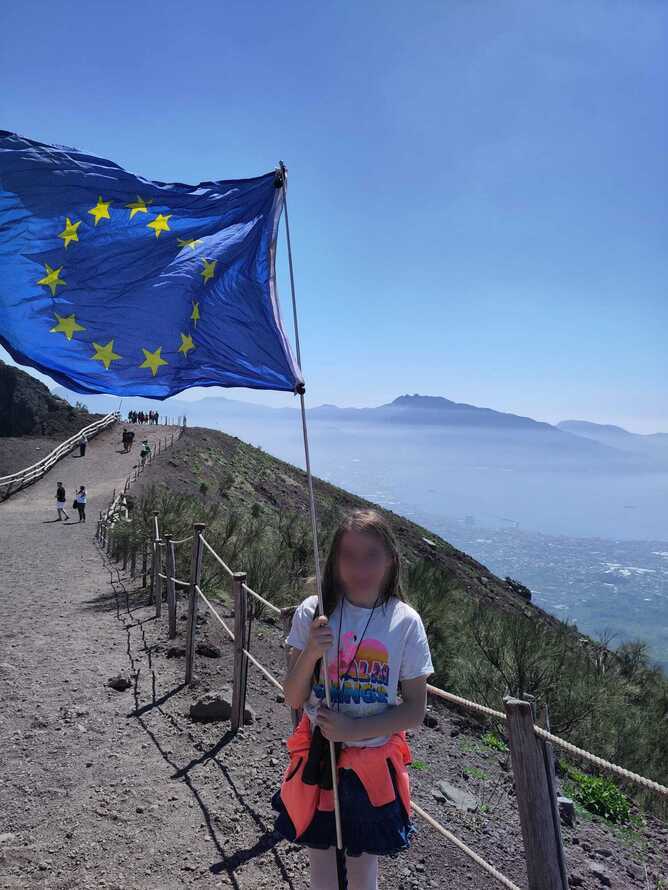
The same goes for goal 7. Promoting and celebrating our shared European identity and values is something that needs input at every opportunity. We need to be creative about identifying opportunities for that at a local level. Its ongoing, and a lot of it will be opportunistic.
Among our membership I guess that we’ll find different mental league-tables for these goals, and they will reflect our differing personal priorities in our pushback against Brexit. You may well not agree with my comments on the list. And that reflects the balance we need to achieve: to motivate and mobilize ourselves and the electorate in a way that’s focused and directional, but at the same time accommodating our different priorities. I guess that is what Neil Kinnock was aiming to achieve. Now, hopefully better times await.
 derby4europe