David Steel Remembers

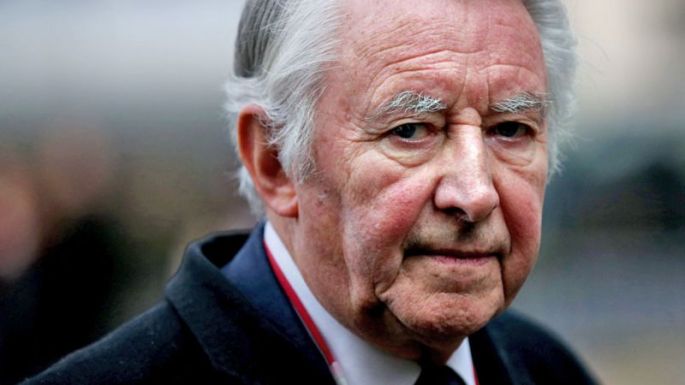
50 years ago this week the UK voted to enter the European Community (Now the EU) in a national referendum. The vote was 2:1 in favour. The Conservative party was largely in favour, with some dissenters. Labour was moving toward Europe, but retained a substantial number of vocal anti-marketeers (as they were known). The Liberals were almost entirely pro-Europe and had been for many years. A leading liberal politician of the time, David (now Lord) Steel, who took a prominent part in the referendum campaign, talks about the referendum and reflects on the UK’s relationship with Europe then, and since. This video is put out by the European Movement and its worth a watch.

UK/EU Conference

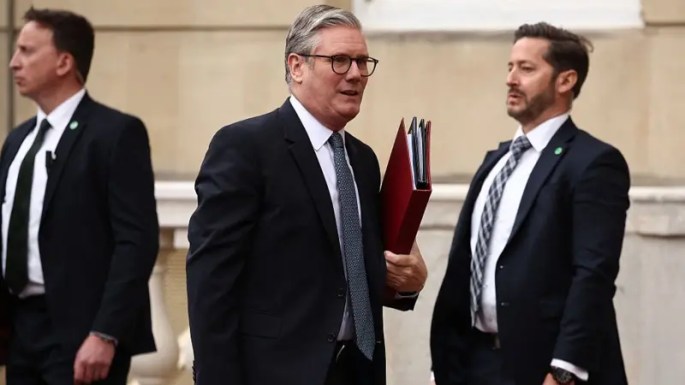
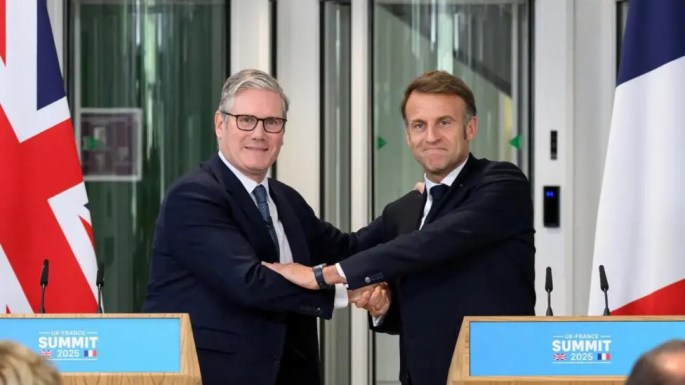
The outcomes of yesterday’s UK/EU conference clearly represent a major move in the right direction. It’s the first time since 2016 that the negotiation process between the UK and the EU has amounted to anything more than hostilities, or (more recently) damage limitation.

Best for Britain’s summary of yesterday’s results is as follows (I quote)

“Easier travel: British holidaymakers will be able to skip queues at border control using EU eGates (and bring their pets on holiday with them).

Youth opportunities: A new youth mobility scheme and re-entry to student exchange programme Erasmus+ is on the horizon.

Cheaper food: Red tape is being cut, keeping food standards high, helping lower food prices and reducing waste.

Working in Europe: Progress is being made on recognising professional qualifications and supporting artists and business travellers.

A Security and Defence Partnership: Support for Ukraine, access to the EU’s €150 billion defence fund, and deeper cooperation on crime and pandemic preparedness.

Lower bills: Energy market cooperation that could cut household costs.”

Best for Britain’s tone is optimistic, and rightly so; we need enthusiasm now to keep the momentum carrying us forward to a more complete reconnection with Europe. And we must not allow ourselves to be unnerved by the ferocity of the Tories and Reform in their denunciations. Reform have already threatened to reverse everything that has been achieved, just as soon as they can. The Tories will doubtless threaten the same. It is hardly surprising that the EU regards the UK with considerable caution, with those voices dominating our political discourse. And it is clearly crucial that the new agreement be seen to work for the benefit of the British people. The realising of those benefits will expose Reform and the Tories for the wreckers they are.

Supporting the EU-UK Summit

Grassroots for Europe and others are celebrating the EU-

UK Summit on Monday 19th May 2025.

GfE, with Stay European, branches of the European

Movement, and YEM (Young European Movement), plan to

welcome the EU delegation by standing outside Downing

Street, where we understand the EU-UK Summit will take place.

So bring your EU and UK flags, berets, t-shirts, etc. We will be

sending positive, peaceful, supportive, and welcoming

messages, and congratulating both sides for working towards a

closer relationship between the EU and UK. More of this please!

Come and show the flag – even if you can only afford a few

minutes in your lunch hour.

Where: Whitehall near Downing Street

When: Monday 19th May 2025

Time: from 10.am to about 5. pm

Supply and cost of medicines in the UK adversely affected by Brexit: Nuffield Trust

The Nuffield Trust has just published a report on the current state of UK Healthcare after Brexit. This is the latest of a series of reports analysing the implications of Brexit for  the UKs healthcare system since 2021. Unlike previous reports, this one clearly identifies Brexit as the main cause for ongoing medicine shortages in the UK. Their previous reports stated that the problem of shortages affected EU countries a well, so the blame on Brexit was qualified. Now, says the latest report, other countries in G7 have pulled ahead while the UK lags; and Brexit is the culprit

Quote below from their website:

“The elevated and troubling level of medicine shortages we noted in earlier reports in this series is continuing, with no sign of improvement in key indicators. We have previously concluded that this is not primarily due to Brexit, with other EU countries also suffering significant shortages. However, data now confirm the UK to have had the lowest import growth in medicines of any G7 country, driven by a reduction in EU imports. This does illustrate the particular impacts of leaving the EU.”

Dayan M, Lobont C, Hervey T, Fahy N, Flear M, Greer S and Jarman H (2025) Health in the UK  after Brexit: Moving apart or stuck together Nuffield Trust: 59 New Cavendish Street London W1G 7LP

Petition to HM Government: “Apply for the UK to join the European Union as a full member as soon as possible”

On march 24th the House of Commons debated a petition for the UK to rejoin the EU. The petition had upward of 130,000 signatures, but Parliamentary procedure did not allow for a vote at the end of the debate. In the online record I couldn’t find any indication of who attended, only of who contributed; and the contributions came mainly from Labour, Lib Dem, Scottish Nationalist and Plaid Cymru MPs. They were overwhelmingly in favour of the petition. I could only find three clearly anti-rejoin voices, one conservative, one DUP and one TUV (Traditional Unionist Voice). It would be very interesting to know how many conservative MPs actually attended.  Other than those exceptions, reading the transcript frankly felt like a rejoin echo-chamber. The Parliamentary Secretary to the Cabinet Office, Abena Oppong-Asare was present, and at the end she gave the government position, which I guess we know by now. ‘You name it, we have no plans to rejoin it’.  I assume she also fed the sense of the debate back to Starmer. If he didn’t already realise the extent of support for rejoin among Labour MPs, he does now.

https://hansard.parliament.uk/Commons/2025-03-24/debates/843E0908-311C-4791-BB00-997E88C5665B/EuropeanUnionUKMembership

Two Recent Publications

  1. From: UK in a changing Europe

The Brexit Files: From Referendum to Reset – Review.

Five years on from Brexit, the ‘UK in a Changing Europe’ thinktank offers a well-researched and well-presented overview of Brexit, from the pre-referendum period right through to the present attempt at a reset with the EU. I counted 40 contributors, all of whom are senior academics and/or researchers, and each of whom contributes (singly or jointly) a 2-4 page paper on a particular aspect of Brexit. The document is divided into three parts:

  • The Brexit Process
  • the Brexit Impact and Aftermath
  • The Future.

Despite the high-octane expertise on show, the papers are reasonably accessible. They are also enormously informative.

2. From the European Movement

The Future of UK-EU Foreign, Security, and Defence Cooperation: Challenges and Opportunities

https://assets.nationbuilder.com/euromove/pages/22480/attachments/original/1742385572/The_Future_of_UK-EU_Foreign_Security_and_Defence_Cooperation_190325.pdf?1742385572

This is the work of European Movement personnel. In 16 pages and 5 chapters it overviews the EU’s defence machinery and the UK’s role in Europe’s defence, actual and potential. It explores the need and possibilities of deepening UK co-operation with the EU on defence and security, and offers a set of recommendations to advance this agenda.

European Movement Women’s x YEM Women Networks Online Launch

As of the 2024 European Movement AGM, a motion was passed to establish a European Movement Women’s network, a historic moment in our 75+ year history. We are delighted to invite you to the historic dual launch #1 of 2 of both the EM Women & YEM Women’s networks on Friday 7th March 6-7:45pm online, just before the official International Women’s Day.

Join us to celebrate the achievements of fantastic women across the Eurosphere, identify key priorities for women’s rights and meet other leaders from across the political spectrum. Hear from an incredible lineup of trailblazers, founders and chairs of women’s networks on the benefits of these spaces and come co-create our vision for the network(s) going forwards.

Chair: Cecilia Jastrzembska, Founder of EM Women and YEM Women, & President of YEM. Senior Policy Advisor, award winning speaker and political journalist. UK Delegate, EuropeTalks, Young European Socialists Committee & EU-UK Stronger Together Network Co-Chair. 

Opening address: Emma Knaggs, Deputy CEO European Movement

Panelists:

  • Baroness Carmen Smith, Vice President European Movement and youngest peer in the House of Lords
  • Frances Scott, Founder of 50:50 Parliament, a cross party organisation which has empowered 2,500 women to stand for local and national office. Frances was named as one of the Evening Standard’s #Progress1000 most influential political changemakers, is a TedX speaker and was included in the list of “Women in Westminster: The 100”
  • Sara Hyde, Chair of the Fabian Society. Parliamentary and a London Assembly candidate, formerly chaired the Fabian Women’s Network and was in the inaugural Jo Cox Women in Leadership cohort.

If you would be interested in volunteering for a formal role in the network, please email Cecilia at cecilia.eve.work@gmail.com .