Starmer-Macron Meeting

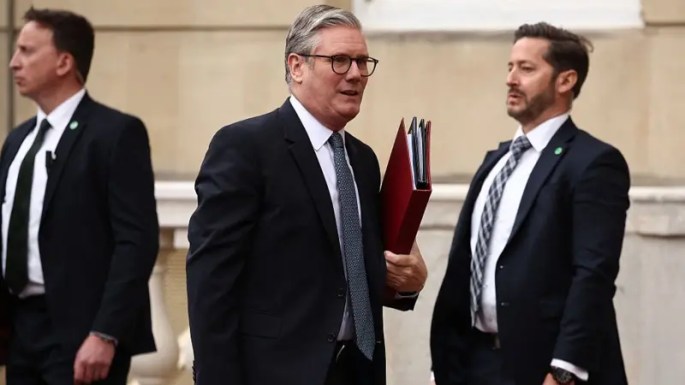
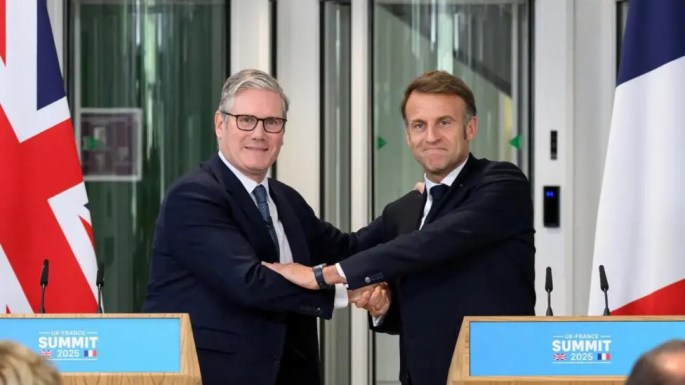
The recent visit by President Macron has resulted in several agreements between France and the UK, the usefulness of which will only become clear in the longer term. One of these is the ‘one in one out’ agreement concerning the exchange of illegal migrants between the UK and France. At first sight the scale of this deal seems very modest indeed, and the fact that it seeks to address a problem that looms so large in the UK only serves to emphasize its very limited scale. But presumably it could be expanded if it works.

 And if it does work, it will perhaps vindicate Macron’s comment about Brexit, made during his visit. He said (I paraphrase) that Brexit was sold to the British public on a false claim; the claim that Brexit would give the UK more control of its own borders and, by implication, enable it to keep more people out of the country. But, Macron argued, the truth is that Brexit has in fact made the UK less able to control its borders, because border control depends on co-operation with neighbouring states (obvious when you think about it), and that co-operation was disrupted by Brexit. And that explains the increase in illegal entries since 2020. Probably Macron is right. But why did he say it? His remark seems to have been addressed to the British public, and Macron must know that he would annoy a lot of people and provoke a backlash from certain quarters. Lecturing us on our bad decisions doesn’t seem a good way to win friends and influence people this side of the channel.

One possible explanation for Macron’s remarks is that he is weak at home (having lost control of the national assembly), and he feels he needs to compensate by high-profile initiatives in foreign policy. He has two years of his second term to go, so he may also be thinking in terms of his legacy. And anyway there has always been a tension in the relationship between France and the UK, with partnership and rivalry closely intertwined. Something that annoys the British might amuse the French.  So perhaps his remarks were ultimately aimed at his own people. Overall the French are less preoccupied with illegal migrants than the British, but local opinion along the French north coast is nonetheless somewhat inflamed on the issue. The mayor of Calais was not impressed by the Macron-Starmer deal. There is a danger that it is already suffering an image problem

In the longer run, the practical effectiveness of the agreement is of enormous political importance. If a narrative can be established that closer co-operation with our neighbours does in fact improve our control of our borders, this will further discredit Brexit. For this reason, I guess, rejoiners should want it to work, and to be seen to work. And for the same reason, brexiters presumably want it to fail, and to be seen to fail. Brexiters need to establish a counter-narrative that co-operation with Europe solves nothing and compromises our sovereignty, and that European leaders are strutting popinjays who cannot be trusted and wish us ill. Farage and Philp have already started work on this. For them, this agreement needs to be discredited.  Macron’s lecturing is irritating, but it will be forgotten- or possibly vindicated. What brexiters really need is for the agreement to go badly wrong, or to seem to go badly wrong. Pro-Brexit media will buzz round it like flies on a cowpat over coming months, looking for anything that feeds their agenda. Starmer needs to talk up the agreement for all he’s worth, but tread carefully in implementing it. 

David Steel Remembers

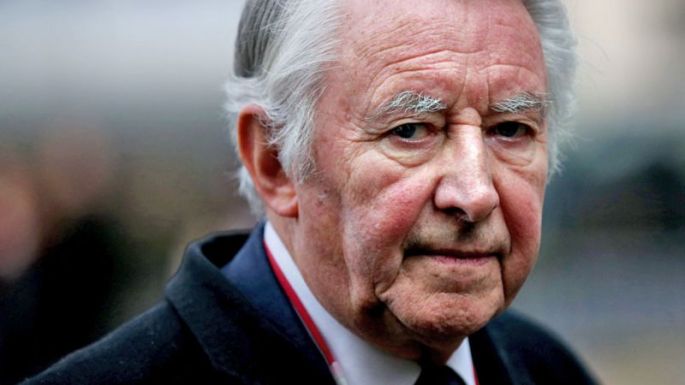
50 years ago this week the UK voted to enter the European Community (Now the EU) in a national referendum. The vote was 2:1 in favour. The Conservative party was largely in favour, with some dissenters. Labour was moving toward Europe, but retained a substantial number of vocal anti-marketeers (as they were known). The Liberals were almost entirely pro-Europe and had been for many years. A leading liberal politician of the time, David (now Lord) Steel, who took a prominent part in the referendum campaign, talks about the referendum and reflects on the UK’s relationship with Europe then, and since. This video is put out by the European Movement and its worth a watch.

UK/EU Conference

The outcomes of yesterday’s UK/EU conference clearly represent a major move in the right direction. It’s the first time since 2016 that the negotiation process between the UK and the EU has amounted to anything more than hostilities, or (more recently) damage limitation.

Best for Britain’s summary of yesterday’s results is as follows (I quote)

“Easier travel: British holidaymakers will be able to skip queues at border control using EU eGates (and bring their pets on holiday with them).

Youth opportunities: A new youth mobility scheme and re-entry to student exchange programme Erasmus+ is on the horizon.

Cheaper food: Red tape is being cut, keeping food standards high, helping lower food prices and reducing waste.

Working in Europe: Progress is being made on recognising professional qualifications and supporting artists and business travellers.

A Security and Defence Partnership: Support for Ukraine, access to the EU’s €150 billion defence fund, and deeper cooperation on crime and pandemic preparedness.

Lower bills: Energy market cooperation that could cut household costs.”

Best for Britain’s tone is optimistic, and rightly so; we need enthusiasm now to keep the momentum carrying us forward to a more complete reconnection with Europe. And we must not allow ourselves to be unnerved by the ferocity of the Tories and Reform in their denunciations. Reform have already threatened to reverse everything that has been achieved, just as soon as they can. The Tories will doubtless threaten the same. It is hardly surprising that the EU regards the UK with considerable caution, with those voices dominating our political discourse. And it is clearly crucial that the new agreement be seen to work for the benefit of the British people. The realising of those benefits will expose Reform and the Tories for the wreckers they are.

Supporting the EU-UK Summit

Grassroots for Europe and others are celebrating the EU-

UK Summit on Monday 19th May 2025.

GfE, with Stay European, branches of the European

Movement, and YEM (Young European Movement), plan to

welcome the EU delegation by standing outside Downing

Street, where we understand the EU-UK Summit will take place.

So bring your EU and UK flags, berets, t-shirts, etc. We will be

sending positive, peaceful, supportive, and welcoming

messages, and congratulating both sides for working towards a

closer relationship between the EU and UK. More of this please!

Come and show the flag – even if you can only afford a few

minutes in your lunch hour.

Where: Whitehall near Downing Street

When: Monday 19th May 2025

Time: from 10.am to about 5. pm

Supply and cost of medicines in the UK adversely affected by Brexit: Nuffield Trust

The Nuffield Trust has just published a report on the current state of UK Healthcare after Brexit. This is the latest of a series of reports analysing the implications of Brexit for  the UKs healthcare system since 2021. Unlike previous reports, this one clearly identifies Brexit as the main cause for ongoing medicine shortages in the UK. Their previous reports stated that the problem of shortages affected EU countries a well, so the blame on Brexit was qualified. Now, says the latest report, other countries in G7 have pulled ahead while the UK lags; and Brexit is the culprit

Quote below from their website:

“The elevated and troubling level of medicine shortages we noted in earlier reports in this series is continuing, with no sign of improvement in key indicators. We have previously concluded that this is not primarily due to Brexit, with other EU countries also suffering significant shortages. However, data now confirm the UK to have had the lowest import growth in medicines of any G7 country, driven by a reduction in EU imports. This does illustrate the particular impacts of leaving the EU.”

Dayan M, Lobont C, Hervey T, Fahy N, Flear M, Greer S and Jarman H (2025) Health in the UK  after Brexit: Moving apart or stuck together Nuffield Trust: 59 New Cavendish Street London W1G 7LP

Government response to the latest ‘rejoin’ petition: Derby EM branch expresses disappointment

Currently, 16, 427 people have signed a recent petition calling on the UK Government to hold a referendum on re-joining the European.  The Cabinet Office yesterday issued a response and as one of the signatories, I’m disappointed, albeit not surprised.

The full text is copied below but essentially it’s the usual warm words about a focus on “strategic alliance with the EU” and strengthening “our relationship with our European friends” to “to address wider global challenges” and “to remove barriers to trade.”

While clearly this is a better place to be than we were under the previous Government, the statement contains a reminder that the Government was elected with a manifesto pledge not to rejoin the EU and a rather limiting commitment that “we will not return to freedom of movement, the Customs Union or the Single Market.”

Given the erratic behaviour of the Trump regime and clear polling evidence that Britons favour a European alliance over the ever less special looking US relationship, was it overly optimistic of me to have hoped that the Government’s statement might have been backed off such a definitive and limiting position?

Full text from the Cabinet Office below:

“The Government has responded to the petition you signed – “Hold a referendum on re-joining the European Union”.

Government responded:

The Government was elected on a manifesto that made clear the UK would not rejoin the EU. We are focused on a strategic alliance with the EU to make the UK safer, more secure and more prosperous.

Since taking office, this Government has been working to strengthen the relationship with our European friends. A closer, more cooperative relationship with the EU is in the UK’s national interest. It will grow the economy, boost living standards, protect our borders and keep the UK safe.

This is about turning the page – reinvigorating alliances and forging new partnerships with our European friends, rather than reopening the divisions of the past. A stronger UK-EU relationship means a stronger Europe.

The Withdrawal Agreement, including the Windsor Framework, and the Trade and Cooperation Agreement underpin relations between the EU and the UK. We are committed to the full and faithful implementation of these agreements, however we believe we can go further to strengthen that relationship. 

In particular, we want to work closely with the EU to address wider global challenges including economic headwinds, geopolitical competition, irregular migration, climate change, energy prices, and of course the security of our citizens, which pose fundamental challenges to the shared values of the UK and EU and provide the strategic driver for stronger cooperation. 

The manifesto upon which this Government was elected set out that we would seek to remove barriers to trade with the EU. Our markets are highly interconnected, so close cooperation can support growth and deliver investment. The Minister for European Union Relations is taking forward discussions on these areas with his counterpart Commissioner Maroš Šefčovič.

The UK will welcome EU leaders to the UK for the first UK-EU Leaders’ Summit on 19 May. This will provide an opportunity to make further progress on areas which will deliver tangible benefits for the people of the UK.”

 There will be issues which are difficult to resolve, as well as areas on which we will stand firm. We have been clear we are not going back to the arguments of the past; we will not return to freedom of movement, the Customs Union or the Single Market. Although we voted to leave the EU, our role as key allies and trading partners remains, and this Government is ambitious, has clear priorities and wants to move forward.

Phil Harris
Cat and Mouse

The other week Trump’s Treasury Secretary, Scott Bessent, said it was unlikely that US tariffs on UK imports would be less than 10%. The message that I took from it was sombre:  ‘Don’t get your hopes up. There’s no give there.’

But then last week Vice-President Vance said there was a ‘good chance’ of a trade deal between the UK and the US. I took that as a message of hope and optimism. Phew! Its looking better!

Then it struck me: hot and cold, up and down, its all part of the Trump playbook, isn’t it.  Keep changing the message, blow hot and cold, keep them guessing. That way, the other guy is always on the back foot. This was Trump’s preferred technique in his New York real-estate days, and he has carried it into world politics. Its part of his transactional approach, part of the zero-sum game.  For Trump to win, the other guy has to lose, so it makes sense to disable and demoralize him as thoroughly as possible. Play cat and mouse with him until he doesn’t know which way is up. That way he’s always the loser.

So far the UK government has allowed itself play the role of loser to perfection. Every time Trump or one of his minions throws a stick, the government goes tearing after it like a keen but none-too-bright retriever. To and fro, up and down. Our behaviour has given Trump all the evidence he needs that his technique works. Clearly it does.

So is there anything we can do to change the game? Can we find a way of giving ourselves some agency, instead of being endlessly reactive?

Yes we can. There’s still time to stop and think: who matters most? who is our closest ally and our biggest trading partner? The answer, of course, is not the USA.  Its the EU. If we turn ourselves inside out in order to please Trump, two things will happen. First, Trump will always demand more. And second, we will alienate ourselves from our European partners- an outcome which is almost certainly part of Trump’s agenda already, and reflects his hostility to the EU and his desire for maximum dominance over whoever is within his range. In that scenario we will soon be eating chlorinated chicken, and the possibility of a better and closer relationship with the EU will be lost. 

That threatens our economy, but it also threatens our security. Its clear that Trump is not interested in NATO, or in Europe’s security. He has made that clear over Ukraine. He won’t protect us. The UK needs to restore a closer relationship with those countries that have a real stake in mutual security and mutual support. That means the EU.

So, no more cat and mouse Keir!  Get your priorities right while you still can.

Stephen Wilmot

P.S. A deeper and more extensive treatment of the bigger picture has recently been offered by journalist Ian Dunt. I recommend it. Click here.