Cat and Mouse

The other week Trump’s Treasury Secretary, Scott Bessent, said it was unlikely that US tariffs on UK imports would be less than 10%. The message that I took from it was sombre:  ‘Don’t get your hopes up. There’s no give there.’

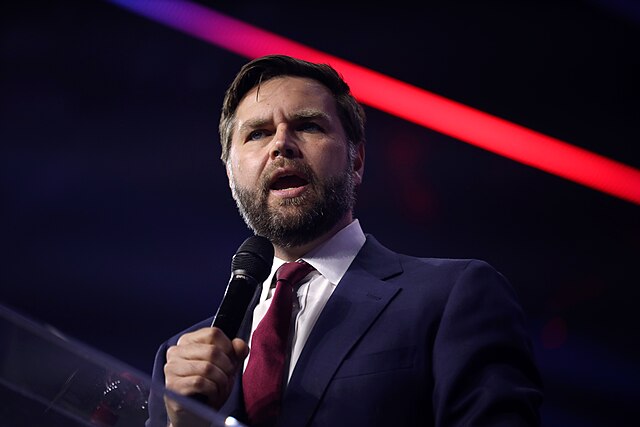
But then last week Vice-President Vance said there was a ‘good chance’ of a trade deal between the UK and the US. I took that as a message of hope and optimism. Phew! Its looking better!

Then it struck me: hot and cold, up and down, its all part of the Trump playbook, isn’t it.  Keep changing the message, blow hot and cold, keep them guessing. That way, the other guy is always on the back foot. This was Trump’s preferred technique in his New York real-estate days, and he has carried it into world politics. Its part of his transactional approach, part of the zero-sum game.  For Trump to win, the other guy has to lose, so it makes sense to disable and demoralize him as thoroughly as possible. Play cat and mouse with him until he doesn’t know which way is up. That way he’s always the loser.

So far the UK government has allowed itself play the role of loser to perfection. Every time Trump or one of his minions throws a stick, the government goes tearing after it like a keen but none-too-bright retriever. To and fro, up and down. Our behaviour has given Trump all the evidence he needs that his technique works. Clearly it does.

So is there anything we can do to change the game? Can we find a way of giving ourselves some agency, instead of being endlessly reactive?

Yes we can. There’s still time to stop and think: who matters most? who is our closest ally and our biggest trading partner? The answer, of course, is not the USA.  Its the EU. If we turn ourselves inside out in order to please Trump, two things will happen. First, Trump will always demand more. And second, we will alienate ourselves from our European partners- an outcome which is almost certainly part of Trump’s agenda already, and reflects his hostility to the EU and his desire for maximum dominance over whoever is within his range. In that scenario we will soon be eating chlorinated chicken, and the possibility of a better and closer relationship with the EU will be lost. 

That threatens our economy, but it also threatens our security. Its clear that Trump is not interested in NATO, or in Europe’s security. He has made that clear over Ukraine. He won’t protect us. The UK needs to restore a closer relationship with those countries that have a real stake in mutual security and mutual support. That means the EU.

So, no more cat and mouse Keir!  Get your priorities right while you still can.

Stephen Wilmot

P.S. A deeper and more extensive treatment of the bigger picture has recently been offered by journalist Ian Dunt. I recommend it. Click here.

This unseemly rush to a trade deal

European Movement Derbyshire

We are writing to you to express our deep concern that the UK is rushing into a trade deal with the United States on purely economic grounds, ignoring the poor reflection this has on our values, both at home to citizens and to our international allies and partners.

We are concerned that mooted proposals to lower our digital safety laws and the digital service tax are an unjust reward for the very same social media companies whose poor online protections have impacted our children’s mental health, allowed online misinformation about multiple subjects, including Brexit and Russia’s invasion of Ukraine, and the thriving of toxic masculinity and misogyny, and who have empowered populists, including the current US administration.

We also worry that this much trailed ‘almost oven-ready’ deal is anything but, and is merely designed to keep the UK separate from its allies and partners, and from expressing public support for the territorial integrity of allies such as Canada (who were never shy of coming forward to support us in the past, in 1939 for example, and are no doubt noticing now how we have failed to publicly support them).

And of course, we worry about lowered food regulations and quality, and another assault on British farmers and food, already hit hard by rushed, one-sided deals with Australia among others. On top of this, having opened our doors to lower quality US produce will make it harder for us to secure improved access to EU markets, to whose standards we are currently closer. And of course, the EU remains our largest trading partner, making it hard to understand why we should stab ourselves in the foot in this way.

We also worry that this potential deal fails to reiterate and reinforce our values of democracy, freedom, and human rights by endorsing a US administration whose president is prepared to ignore his own supreme court over a wrongly deported person to San Salvador.

There are even rumours Trump wants us to repeal hate speech laws.

We are also deeply concerned about the Trump administration’s assault on education and Harvard University in particular. Any democracy that still pretends to be one has to firewall institutions from political interference. Precedents in the past of what happens when educational and other establishments ‘obey in advance’ abound and we must not and cannot condone the same, especially when British politicians openly advocate for policies such as withdrawal from the European Convention on Human Rights. It’s always said that you can understand people by the company they choose (Putin, Orban, and Germany’s AfD) and those whom they denigrate (Canada, Greenland, Denmark, Democrats, Columbia & Harvard Universities, Zelensky and Ukraine, high ranking female officers in the American armed forces). We must choose more wisely than some short term trade deal.

And of course, in choosing wisely we stand with the large number of US citizens who are appalled at, and actively opposing, what their government is doing in their name, and who do share our values.

Our future does not lie in a special relationship that has never been more than fig leaf. If we must prioritise trade deals, let it be with reliable allies. By rushing into a US deal, the UK merely makes itself look as unreliable and immoral as the current US government, and sides with a country whose current president continues to blame Ukraine for Russia’s invasion.

There are already warnings a US trade deal will setback any EU-UK reset, and this could also affect our ability to arm ourselves independently of the US if we then cannot collaborate with EU based defence companies and funds.

Yours sincerely,

Please find your MP at Write to Them https://www.writetothem.com/ by entering your postcode and share this letter with them. Please feel free to add your own specific concerns and thoughts.

We also encourage you to share it with others, and via social media. Acknowledgement of European Movement Derbyshire greatly appreciated.

1This statement was written by European Movement Derbyshire, who are urging supporters in the country and beyond to share it with their MPs, representatives and local media.

2https://www.bbc.co.uk/news/articles/cn05dge02vzo

3https://theweek.com/tech/what-trumps-tech-bros-want

4https://www.amnesty.org.uk/press-releases/toxic-tech-new-polling-exposes-widespread-online-misogyny-driving-gen-z-away-social

5https://www.independent.co.uk/voices/jd-vance-uk-us-trade-deal-trump-tariffs-brexit-nhs-b2733592.html

6https://www.pressreader.com/uk/the-scotsman/20250318/282230901473611

7https://www.bbc.co.uk/news/articles/cp31qqlq29vo

8https://inews.co.uk/news/politics/free-trade-deal-brexit-reset-us-uk-3379146

9https://www.rollingstone.com/politics/politics-news/trump-defies-supreme-court-deported-man-el-salvador-prison-1235316677/

10https://www.independent.co.uk/news/uk/politics/trump-jd-vance-trade-deal-free-speech-b2733806.html

11https://www.bbc.com/news/articles/cz01y9gkdm3o

12https://www.donotobeyinadvance.com/portfolio/do-not-obey-in-advance/

13https://www.bbc.co.uk/news/articles/c981lr84013o

14https://apnews.com/article/pentagon-hegseth-trump-dei-chatfield-nato-23df15b59766458d106567ba782d2f15

15https://apnews.com/article/donald-trump-protests-53c6a993ee4892d4b5f9f90607f410e3

16https://www.bbc.com/news/articles/cg5q0mev07lo

17https://www.ft.com/content/eb9e0ddc-8606-46f5-8758-a1b8beae14f1

Petition to HM Government: “Apply for the UK to join the European Union as a full member as soon as possible”

On march 24th the House of Commons debated a petition for the UK to rejoin the EU. The petition had upward of 130,000 signatures, but Parliamentary procedure did not allow for a vote at the end of the debate. In the online record I couldn’t find any indication of who attended, only of who contributed; and the contributions came mainly from Labour, Lib Dem, Scottish Nationalist and Plaid Cymru MPs. They were overwhelmingly in favour of the petition. I could only find three clearly anti-rejoin voices, one conservative, one DUP and one TUV (Traditional Unionist Voice). It would be very interesting to know how many conservative MPs actually attended.  Other than those exceptions, reading the transcript frankly felt like a rejoin echo-chamber. The Parliamentary Secretary to the Cabinet Office, Abena Oppong-Asare was present, and at the end she gave the government position, which I guess we know by now. ‘You name it, we have no plans to rejoin it’.  I assume she also fed the sense of the debate back to Starmer. If he didn’t already realise the extent of support for rejoin among Labour MPs, he does now.

https://hansard.parliament.uk/Commons/2025-03-24/debates/843E0908-311C-4791-BB00-997E88C5665B/EuropeanUnionUKMembership

Two Recent Publications

  1. From: UK in a changing Europe

The Brexit Files: From Referendum to Reset – Review.

Five years on from Brexit, the ‘UK in a Changing Europe’ thinktank offers a well-researched and well-presented overview of Brexit, from the pre-referendum period right through to the present attempt at a reset with the EU. I counted 40 contributors, all of whom are senior academics and/or researchers, and each of whom contributes (singly or jointly) a 2-4 page paper on a particular aspect of Brexit. The document is divided into three parts:

  • The Brexit Process
  • the Brexit Impact and Aftermath
  • The Future.

Despite the high-octane expertise on show, the papers are reasonably accessible. They are also enormously informative.

2. From the European Movement

The Future of UK-EU Foreign, Security, and Defence Cooperation: Challenges and Opportunities

https://assets.nationbuilder.com/euromove/pages/22480/attachments/original/1742385572/The_Future_of_UK-EU_Foreign_Security_and_Defence_Cooperation_190325.pdf?1742385572

This is the work of European Movement personnel. In 16 pages and 5 chapters it overviews the EU’s defence machinery and the UK’s role in Europe’s defence, actual and potential. It explores the need and possibilities of deepening UK co-operation with the EU on defence and security, and offers a set of recommendations to advance this agenda.

Vance Again

Vance’s attitude to Europe was further confirmed on March 24th when a top secret group chat conversation was leaked, involving several senior US officials, including Vice-President Vance. They were discussing a US attack on the Houthi forces in Yemen, and Vance said that he hated  ‘bailing Europe out again’. The conversation, on the Signal group app, unaccountably included a senior journalist on the Atlantic Magazine, who publicised some of its contents, including Vance’s comment. Defence secretary Pete Hegseth expressed agreement with Vance, describing European ‘freeloading’ as ‘pathetic’. It’s as clear an indication of the administration’s attitude to Europe as anyone could wish for.  

European Movement Women’s x YEM Women Networks Online Launch

As of the 2024 European Movement AGM, a motion was passed to establish a European Movement Women’s network, a historic moment in our 75+ year history. We are delighted to invite you to the historic dual launch #1 of 2 of both the EM Women & YEM Women’s networks on Friday 7th March 6-7:45pm online, just before the official International Women’s Day.

Join us to celebrate the achievements of fantastic women across the Eurosphere, identify key priorities for women’s rights and meet other leaders from across the political spectrum. Hear from an incredible lineup of trailblazers, founders and chairs of women’s networks on the benefits of these spaces and come co-create our vision for the network(s) going forwards.

Chair: Cecilia Jastrzembska, Founder of EM Women and YEM Women, & President of YEM. Senior Policy Advisor, award winning speaker and political journalist. UK Delegate, EuropeTalks, Young European Socialists Committee & EU-UK Stronger Together Network Co-Chair. 

Opening address: Emma Knaggs, Deputy CEO European Movement

Panelists:

  • Baroness Carmen Smith, Vice President European Movement and youngest peer in the House of Lords
  • Frances Scott, Founder of 50:50 Parliament, a cross party organisation which has empowered 2,500 women to stand for local and national office. Frances was named as one of the Evening Standard’s #Progress1000 most influential political changemakers, is a TedX speaker and was included in the list of “Women in Westminster: The 100”
  • Sara Hyde, Chair of the Fabian Society. Parliamentary and a London Assembly candidate, formerly chaired the Fabian Women’s Network and was in the inaugural Jo Cox Women in Leadership cohort.

If you would be interested in volunteering for a formal role in the network, please email Cecilia at cecilia.eve.work@gmail.com .

Vance’s Speech at Munich

US Vice President Vance’s speech to the Munich security conference last week came as something of a shock, not only because of its undisguised hostility to Europe, but also because of the basis of that hostility. The speech was focused on ‘culture war’ issues around  immigration, reproductive rights and religious dissent. Vance’s claim, that these internal issues were somehow a bigger threat to Europe than Vladimir Putin, was frankly bizarre. My reading of Vance’s book ‘Hillbilly Elegy’ indicated that Vance is a balanced, thoughtful and humane man. However, his Munich speech suggests a very different person. We don’t know how far Trump had vetted his speech beforehand, but there have been no visible repercussions since, so we can take it that he approved it, before or after, as the Trump administration’s view of Europe.

There are several possible explanations for the speech, some of them not mutually exclusive. Let me run through a few, with ratings:

  • ‘Tough Love’ shock therapy to get Europe to pay more for its defence.  But that doesn’t stack up. Vance actually minimized the external threats to Europe, telling us that we are our own worst enemies. 2/10
  • A sincere exhortation to Europe to converge with Trump and Vance’s version of the US: Christian, conservative and white. Vance would certainly be the right man to put that case, as he seems to really believe in that version of America. For Trump its just a vote-winner. But the hectoring hostility of the speech surely casts doubt on that explanation. 3/10
  • A signal to Europe’s far right that they have a friend in America. That has a little more credibility. Far right governments in Europe would be more compliant with US policy than the present incumbents; But the far right would be even more compliant with Russian policy. Do Trump and Vance realise that? 5/10
  • A signal to Vladimir Putin that the US is no longer a friend to Europe, so no longer its protector against Putin’s ambitions. Yes, that certainly has more credibility. Even Vance’s language echoes some of Putin’s anti-liberal rants. 7/10
  • A pre-justification exercise, casting Europe as unstable and corrupt. By implication that makes Europe unfit to be included in the Ukraine negotiations. This explanation probably comes top on credibility, now that Trump has started negotiating with Putin about Ukraine. Without Europe. 9/10

Whatever the intention, the speech clearly signals a widening ideological gulf between the US and the present political order in Europe. If we put this alongside Trump’s territorial demands and threats against Canada and Denmark, its fairly clear that the NATO alliance is a dead letter. The US is recasting itself as an adversary to most of its former allies. Its tone is aggrieved and predatory.

NATO was founded on the assumption of US leadership, and has worked on that basis for 75 years. It’s hard to imagine how that could be unpicked if the US turns rogue. A fresh start is the logical response, though the practical challenges of that are huge. The only pre-existing institutional arrangement that includes most (not all) of the other NATO members is the EU, which in institutional terms is completely unsuited to being the framework for a miliary alliance. But there is no obvious alternative, other than a return to 1930’s Europe, with small states jockeying for position, and short-lived two or three-state alliances, mostly being picked off and gobbled up by Hitler or Stalin in the end. Not a good model.

Stephen Wilmot

Five Years of Brexit

The BBC’s 5 year overview of the results of Brexit (published last week and authored by Ben Chu and Tamara Kovacevis), strikes a careful tone of neutrality, but can‘t disguise the damage done to our economy and society by Brexit.

It starts by saying “Brexit was hugely divisive, both politically and socially, dominating political debate and with arguments about its impacts raging for years”.

 
The authors select 5 areas for review.  Here are a few highlights:

1. Trade

The authors say that some recent studies suggest  UK exports are 30% lower than they would have been if we had not left the single market and customs union.

Several studies suggest around this figure. One example from the Centre for Business Prosperity Aston University; Unbound: UK Trade post-Brexit (September 2024; authored by By Jun Du, Xingyi Liu, Oleksandr Shepotylo and Yujie Shi). Find it on:

https://www.aston.ac.uk/sites/default/files/2024-09/Full%20Report.pdf.

Alternatively we have a different figure from the Centre for Economic Performance Discussion Paper no 2066.   (December 2024 authored by Rebecca Freemen et al) They put the drop at only 6.4%.

The Office of Budget Responsibility still believes that the long-term reduction in imports and exports will be 15% and that will continue to reduce the size of the economy by 4%

New trade deals with other countries seem to make up for about 5% of the total loss from Brexit (my calculation). but we still await deals with India and the US.

2. Migration:

EU net immigration fell from 300,000 in 2016 to a negative rate now as more EU citizens left the UK than came in.

Non EU migration increased from from 70/80,000in 2016 to 900,000 last year

3. Travel

UK citizens have lost the right of residence in the EU.

The EU is introducing 2 new measures to control travel from outside EU next year, either or both of which could create a great deal of travel delay and inconvenience.

4. Laws

Many EU laws have stayed on the statute book despite the expressed intention of the last government to remove them

5. Money

Like all EU members the UK paid a contribution to the EU’s kitty, and that stopped in 2020. Our annual payment into the EU at that stage was £18bn. However, with rebates and payments coming back in from the EU amounting to about half of that, the notional annual saving is £9bn.

January Update

  1. On January 9th The independent published a special report on the effects of 5 years of Brexit on the UK economy. Some takeaways:
  • In one year alone (2022) the value of goods exported to the EU from the UK dropped by £27billion.
  • The annual decrease in UK food exports to EU is £2.8billion.
  • The number of businesses that stopped exporting to the EU stands at 16,400.
  • Long term hit to UK trade is 15%.

There are many more figures on the Independent’s website. They are all drawn from reputable sources (eg Office of Budget Responsibility) and deeply depressing


2. On January 16th The Institute for Public Policy Research, a major thinktank, produced a report on the UK ‘s trading relationship with the rest of the world. One of its three final recommendations relates to trading relations with the EU, and says:

“… the UK should build on the Trade and Cooperation Agreement to strengthen its trading relationship with the EU. This includes proposing a mutual recognition agreement and veterinary deal, suggesting the addition of a new mobility chapter to the TCA, and pursuing an agreement to link theUK and EU emissions trading systems”

‘Mutual recognition’ relates to the need for UK and EU to recognize one another’s professional/occupational qualifications. A veterinary deal would relate to health-related regulation of food imports and exports and again concerns the harmonization of UK and EU regulations. (Morris 2025)


3. As for political action, the Lib Dems intervened twice last week.

First, Lib Dem MP James MacCleary introduced a Ten-Minute Rule Bill into the House of Commons calling for an EU-UK Youth Mobility Scheme. This passed its first reading.

Second, Lib Dem leader Sir Ed Davey made a speech last week in which he argued that the UK should negotiate a new Customs Union deal with the EU.