Five years on from Brexit, the ‘UK in a Changing Europe’ thinktank offers a well-researched and well-presented overview of Brexit, from the pre-referendum period right through to the present attempt at a reset with the EU. I counted 40 contributors, all of whom are senior academics and/or researchers, and each of whom contributes (singly or jointly) a 2-4 page paper on a particular aspect of Brexit. The document is divided into three parts:
The Brexit Process
the Brexit Impact and Aftermath
The Future.
Despite the high-octane expertise on show, the papers are reasonably accessible. They are also enormously informative.
2. From the European Movement
‘The Future of UK-EU Foreign,Security, and DefenceCooperation: Challengesand Opportunities‘
This is the work of European Movement personnel. In 16 pages and 5 chapters it overviews the EU’s defence machinery and the UK’s role in Europe’s defence, actual and potential. It explores the need and possibilities of deepening UK co-operation with the EU on defence and security, and offers a set of recommendations to advance this agenda.
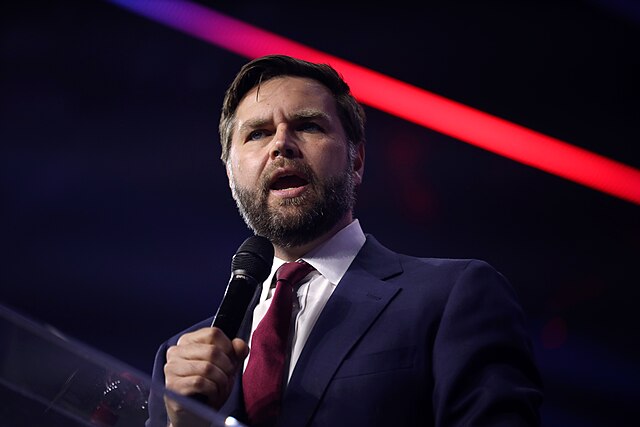
Vance’s attitude to Europe was further confirmed on March 24th when a top secret group chat conversation was leaked, involving several senior US officials, including Vice-President Vance. They were discussing a US attack on the Houthi forces in Yemen, and Vance said that he hated ‘bailing Europe out again’. The conversation, on the Signal group app, unaccountably included a senior journalist on the Atlantic Magazine, who publicised some of its contents, including Vance’s comment. Defence secretary Pete Hegseth expressed agreement with Vance, describing European ‘freeloading’ as ‘pathetic’. It’s as clear an indication of the administration’s attitude to Europe as anyone could wish for.
As of the 2024 European Movement AGM, a motion was passed to establish a European Movement Women’s network, a historic moment in our 75+ year history. We are delighted to invite you to the historic dual launch #1 of 2 of both the EM Women & YEM Women’s networks on Friday 7th March 6-7:45pm online, just before the official International Women’s Day.
Join us to celebrate the achievements of fantastic women across the Eurosphere, identify key priorities for women’s rights and meet other leaders from across the political spectrum. Hear from an incredible lineup of trailblazers, founders and chairs of women’s networks on the benefits of these spaces and come co-create our vision for the network(s) going forwards.
Chair: Cecilia Jastrzembska, Founder of EM Women and YEM Women, & President of YEM. Senior Policy Advisor, award winning speaker and political journalist. UK Delegate, EuropeTalks, Young European Socialists Committee & EU-UK Stronger Together Network Co-Chair.
Opening address: Emma Knaggs, Deputy CEO European Movement
Panelists:
Baroness Carmen Smith, Vice President European Movement and youngest peer in the House of Lords
Frances Scott, Founder of 50:50 Parliament, a cross party organisation which has empowered 2,500 women to stand for local and national office. Frances was named as one of the Evening Standard’s #Progress1000 most influential political changemakers, is a TedX speaker and was included in the list of “Women in Westminster: The 100”
Sara Hyde, Chair of the Fabian Society. Parliamentary and a London Assembly candidate, formerly chaired the Fabian Women’s Network and was in the inaugural Jo Cox Women in Leadership cohort.
If you would be interested in volunteering for a formal role in the network, please email Cecilia at cecilia.eve.work@gmail.com .
US Vice President Vance’s speech to the Munich security conference last week came as something of a shock, not only because of its undisguised hostility to Europe, but also because of the basis of that hostility. The speech was focused on ‘culture war’ issues around immigration, reproductive rights and religious dissent. Vance’s claim, that these internal issues were somehow a bigger threat to Europe than Vladimir Putin, was frankly bizarre. My reading of Vance’s book ‘Hillbilly Elegy’ indicated that Vance is a balanced, thoughtful and humane man. However, his Munich speech suggests a very different person. We don’t know how far Trump had vetted his speech beforehand, but there have been no visible repercussions since, so we can take it that he approved it, before or after, as the Trump administration’s view of Europe.
There are several possible explanations for the speech, some of them not mutually exclusive. Let me run through a few, with ratings:
‘Tough Love’ shock therapy to get Europe to pay more for its defence. But that doesn’t stack up. Vance actually minimized the external threats to Europe, telling us that we are our own worst enemies. 2/10
A sincere exhortation to Europe to converge with Trump and Vance’s version of the US: Christian, conservative and white. Vance would certainly be the right man to put that case, as he seems to really believe in that version of America. For Trump its just a vote-winner. But the hectoring hostility of the speech surely casts doubt on that explanation. 3/10
A signal to Europe’s far right that they have a friend in America. That has a little more credibility. Far right governments in Europe would be more compliant with US policy than the present incumbents; But the far right would be even more compliant with Russian policy. Do Trump and Vance realise that? 5/10
A signal to Vladimir Putin that the US is no longer a friend to Europe, so no longer its protector against Putin’s ambitions. Yes, that certainly has more credibility. Even Vance’s language echoes some of Putin’s anti-liberal rants. 7/10
A pre-justification exercise, casting Europe as unstable and corrupt. By implication that makes Europe unfit to be included in the Ukraine negotiations. This explanation probably comes top on credibility, now that Trump has started negotiating with Putin about Ukraine. Without Europe. 9/10
Whatever the intention, the speech clearly signals a widening ideological gulf between the US and the present political order in Europe. If we put this alongside Trump’s territorial demands and threats against Canada and Denmark, its fairly clear that the NATO alliance is a dead letter. The US is recasting itself as an adversary to most of its former allies. Its tone is aggrieved and predatory.
NATO was founded on the assumption of US leadership, and has worked on that basis for 75 years. It’s hard to imagine how that could be unpicked if the US turns rogue. A fresh start is the logical response, though the practical challenges of that are huge. The only pre-existing institutional arrangement that includes most (not all) of the other NATO members is the EU, which in institutional terms is completely unsuited to being the framework for a miliary alliance. But there is no obvious alternative, other than a return to 1930’s Europe, with small states jockeying for position, and short-lived two or three-state alliances, mostly being picked off and gobbled up by Hitler or Stalin in the end. Not a good model.
The BBC’s 5 year overview of the results of Brexit (published last week and authored by Ben Chu and Tamara Kovacevis), strikes a careful tone of neutrality, but can‘t disguise the damage done to our economy and society by Brexit.
It starts by saying “Brexit was hugely divisive, both politically and socially, dominating political debate and with arguments about its impacts raging for years”.
The authors select 5 areas for review. Here are a few highlights:
1. Trade
The authors say that some recent studies suggest UK exports are 30% lower than they would have been if we had not left the single market and customs union.
Several studies suggest around this figure. One example from the Centre for Business Prosperity Aston University; Unbound: UK Trade post-Brexit (September 2024; authored by By Jun Du, Xingyi Liu, Oleksandr Shepotylo and Yujie Shi). Find it on:
Alternatively we have a different figure from the Centre for Economic Performance Discussion Paper no 2066. (December 2024 authored by Rebecca Freemen et al) They put the drop at only 6.4%.
The Office of Budget Responsibility still believes that the long-term reduction in imports and exports will be 15% and that will continue to reduce the size of the economy by 4%
New trade deals with other countries seem to make up for about 5% of the total loss from Brexit (my calculation). but we still await deals with India and the US.
2. Migration:
EU net immigration fell from 300,000 in 2016 to a negative rate now as more EU citizens left the UK than came in.
Non EU migration increased from from 70/80,000in 2016 to 900,000 last year
3. Travel
UK citizens have lost the right of residence in the EU.
The EU is introducing 2 new measures to control travel from outside EU next year, either or both of which could create a great deal of travel delay and inconvenience.
4. Laws
Many EU laws have stayed on the statute book despite the expressed intention of the last government to remove them
5.Money
Like all EU members the UK paid a contribution to the EU’s kitty, and that stopped in 2020. Our annual payment into the EU at that stage was £18bn. However, with rebates and payments coming back in from the EU amounting to about half of that, the notional annual saving is £9bn.
On January 9th The independent published a special report on the effects of 5 years of Brexit on the UK economy. Some takeaways:
In one year alone (2022) the value of goods exported to the EU from the UK dropped by £27billion.
The annual decrease in UK food exports to EU is £2.8billion.
The number of businesses that stopped exporting to the EU stands at 16,400.
Long term hit to UK trade is 15%.
There are many more figures on the Independent’s website. They are all drawn from reputable sources (eg Office of Budget Responsibility) and deeply depressing
2. On January 16th The Institute for Public Policy Research, a major thinktank, produced a report on the UK ‘s trading relationship with the rest of the world. One of its three final recommendations relates to trading relations with the EU, and says:
“… the UK should build on the Trade and Cooperation Agreement to strengthen its trading relationship with the EU. This includes proposing a mutual recognition agreement and veterinary deal, suggesting the addition of a new mobility chapter to the TCA, and pursuing an agreement to link theUK and EU emissions trading systems”
‘Mutual recognition’ relates to the need for UK and EU to recognize one another’s professional/occupational qualifications. A veterinary deal would relate to health-related regulation of food imports and exports and again concerns the harmonization of UK and EU regulations. (Morris 2025)
3. As for political action, the Lib Dems intervened twice last week.
First, Lib Dem MP James MacCleary introduced a Ten-Minute Rule Bill into the House of Commons calling for an EU-UK Youth Mobility Scheme. This passed its first reading.
Second, Lib Dem leader Sir Ed Davey made a speech last week in which he argued that the UK should negotiate a new Customs Union deal with the EU.
This article on the ‘Conversation’ website is well worth a read. Much of the content is somewhat challenging for pro-Europeans, but it finishes with some positive comments and suggestions. Click here.
2024 has been an important year for pro-Europeans, giving us, as it has, a Labour government in the UK and Trump in the US. July 2024 marked the end of five years of a ferociously Brexiteer Tory government, purged to resemble a revolutionary vanguard, and determined to reshape the politics and culture of the UK. Rejoiners were just one group among many whom the Tory Brexiteers identified as enemies, as we shared that honour with the BBC, the legal profession, teachers, universities, the Woke of every description, and of course the EU itself; among many others. Over those five years the atmosphere in the UK was highly polarized and, despite seeking to be a broad church, pro-Europeans were placed in a position of direct antagonism to the government.
Now, six months after the election, the situation is transformed, and everything is much more complicated. With Labour in power, we move from polarization to ambiguity. We know that most Labour MPs, members and voters are anti-Brexit. But holding an opinion and deciding a course of action from that opinion are very different things. Though we hear and read pro-EU opinions from Labour quarters often enough, action moves very slowly. There is clearly an active dialogue between the UK government and the EU commission on a number of fronts. Those involved in campaigning for rejoining Erasmus, the EU student exchange programme, will feel some encouragement from discussions over youth mobility, though agreement still seems a good way off. Progress on other key areas, security, fishing and the veterinary agreement, is also slow and halting.
Meanwhile, having lost the government, the Brexiteer centre of gravity has migrated, and now bestrides the Atlantic. Trump has been hostile to the EU since his first administration, and many commentators anticipate that he will use the stick of tariffs and the carrot of a trade deal to coerce the UK away from the EU and toward economic subjection to the US. In that event we would be required to sacrifice much of what we value. The biggest sacrifice, probably, would be our health. We would be required to abandon many of our food standards to allow US imports; and we would be expected to open our National Health Service to predatory US healthcare provider companies. Moreover Trump’s ally Elon Musk is threatening to use his colossal wealth and influence to undermine the present UK government. And they have a serviceable outrider in Farage. He evidently sees himself as Trump’s representative on earth, and given his political skills, its likely that he will perform that function very effectively. So, having endured five years of a home-grown Brexit hegemony, we will now be facing four years of the transatlantic version. Does Starmer have the guts to stand up to this? De we?
As to the European Movement itself, I quote Chair Mike Galsworthy’s end-of-year message to members emailed on December 27th. His list of achievements is as follows:
“Our movement now holds the secretariat for the All-Party Parliamentary Group (APPG) on Europe – a move welcomed by the government and which has huge potential to drive political change from the heart of Westminster.
Our movement ran our first Europe Day in collaboration with the National Liberal Club, bringing Guy Verhofstadt from Brussels to join us.
Our movement launched a Manifesto on Europe during the general election and sent it to thousands of political candidates, making their replies available via our online tool.
Our movement has launched nationwide campaigns, with Face The Music, This is Erasmus, and a call for an inquiry into the future UK-EU relationship.
Our movement is now getting into national press more frequently than ever before and we’re building media capacity fast.
Our movement now has24,000 members – and is growing every day
In addition to all that he is asking for ideas from members on what the EM should be focusing on in 2025. Reply to info@europeanmovement.co.uk
Other pro-rejoin organizations have also been active during the year. These include broadly focused groups such as Grassroots for Europe, the Rejoin Party and the March for Rejoin, as well as specifically focused organizations such as Thank EU for the music, and the Festival of Europe (see our ‘Get Involved’ page for links to these). The March for Rejoin successfully organized the second annual march, in London, in September.
New Year is a good time for reflection and reappraisal, and Mike Galsworthy’s request for ideas is worthy of a response. So, when it comes to thinking outside the box, there’s no time like the present.


 derby4europe